Raising a Safety Conscious Child: Situational Awareness for Ages 5 to 8
Introduction: Situational Awareness as a Superpower
Between kindergarten and third grade, kids start independently interacting with the world, playgrounds, school, and stores. This is the perfect window to empower them with safety habits that feel like play but build powerful life skills.
“Children who observe with intention grow into
teens who act with confidence.”
Section 1. Upgrading the Classics
Stop, Look and Listen - Version 2.0
Elementary school children have sung this song, “Stop, Look and Listen”, repeatedly until they have retained this important rule about street and car safety. This practice of stopping to think, looking around to check, and listening to the noises around you is still a valuable tool when you expand these observation skills to personal safety - Learning Situational Awareness.
Move beyond street safety. Use this framework:
Stop: What’s happening around you? Take in the “big picture” of the environment you enter. Just like in a book, look behind main characters and see into all corners of the room.
Look: Who’s nearby? Are people smiling? Upset? Alone? Together?
Are there older kids around, teens hanging out? Find the people that can help you if you need it. Be aware of the people and happenings around you.
Listen: What sounds do you hear? Are they calming or chaotic?
Do you hear the noise or sound getting louder and louder?
Changes in noise frequency, energy levels, or the tones of conversations around you can give you a clue to take action to ensure safety.
I Spy with a Safety Twist
Modifying some of the games you already play with your children to make them more situational observationally focused.
Take I Spy to the next level.
“I spy something that could help if someone were in trouble.”
“I spy something that looks broken or out of place.”
“I spy something that can put out a fire.”
“I spy something that can trip someone.”
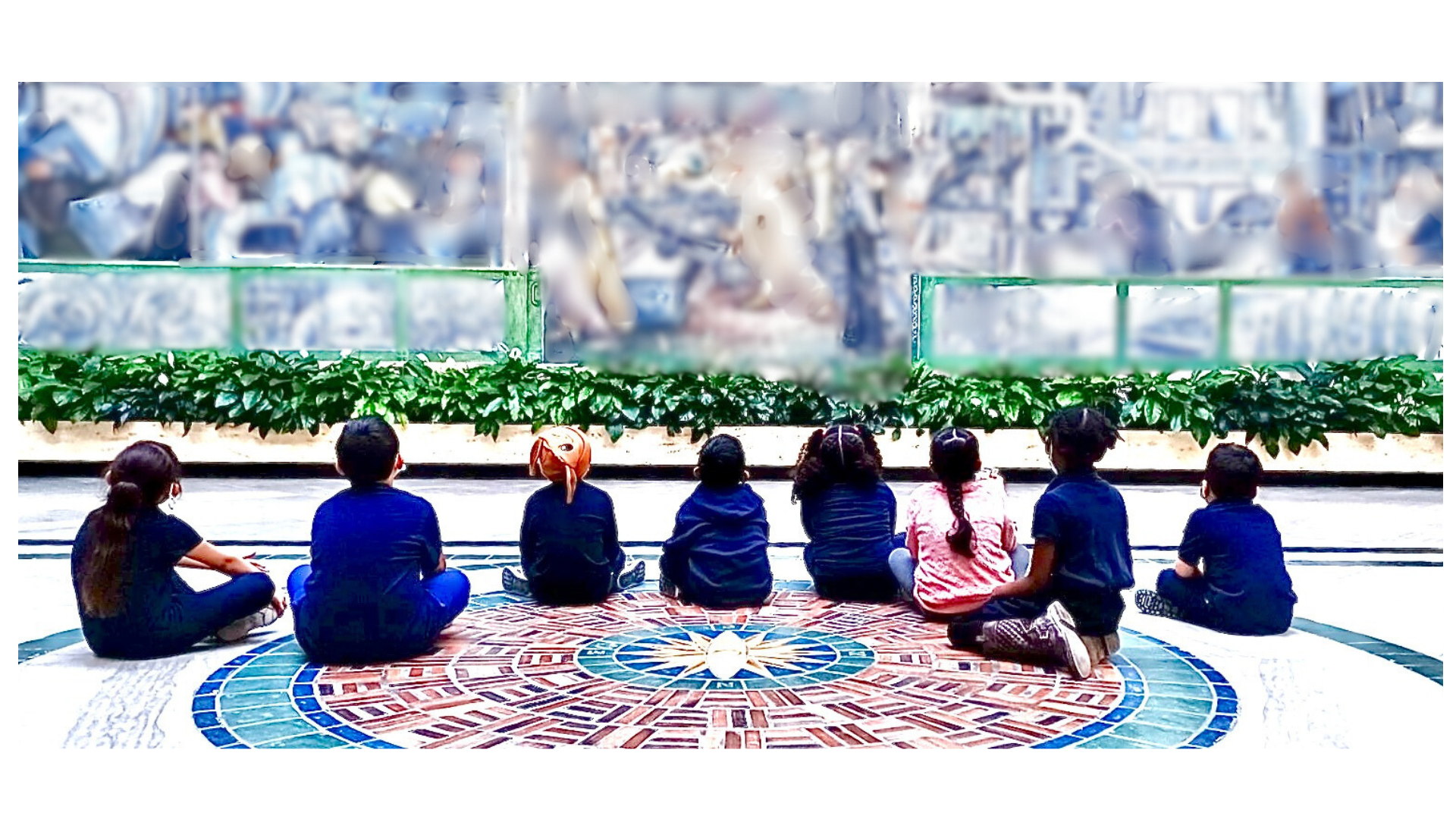
Kids studying a mural. (Photo by Lorena Salazar)
Museums and Public Places
As discussed in a previous post, the early awareness training that mindful parents have done since their children were toddlers and preschools are a good start. You can continue to build upon the foundation for learning situational safety awareness with activities you already do with your children.
Spending time in Museums of all kinds help your child to see the big picture. For art museums, libraries, and in galleries, ask about the environment:
“Wow did you notice how quiet and calm it is in here? Watch the people. What are they doing?”
“Did you notice how libraries and schools smell like books?”
Sit in front of a mural and ask them what they see? Are there interesting things happening in the background?
Does the art make them feel a certain way?
To help them become safety aware, give them missions:
“Find a fire extinguisher.”
Discuss exits and entrances. “Let’s count the exit signs we find?”
Point out information desks, guards, cashiers, or helpers?
Are there any cautions signs anywhere? Look for the color yellow.
Ask, “If you got separated, where would you go?”
Section 2. Turning Play into Practice
Role-play: People in Uniform
For awareness training, ask about a picture, or role-play being firefighters, doctors, plumbers, chefs, carpenters, ninjas, and so on. Ask:
What does a firefighter do? What tools do they use? What do they wear? What do they carry.”
For safety and situational awareness have them act out how to ask for help from firefighters, teachers, librarians, cashiers and guards.
Map Reading
Use simple maps (even a playground, room layout, or a building map). Pick up a map at the entrance of a museum, zoo, aquarium or park and hand it to your child.
“Where are the exits?”
“If this part was blocked, what would you do?”
“Can you find where the bathrooms are?”
“Where is the security office located or the first aid station?”
When you pass these areas in your travels, point them out. If your child was able to guide you and knows where they are before you get there, they need high praise indeed.
Conclusion: Build Safety Habits Through Curiosity
Encourage questions and treat awareness like a treasure hunt. The more practice they have in neutral situations, the more confident they’ll be in stressful ones.
Encourage the idea that being a safety-conscious and situationally aware kid is a family goal and highly valued. Safety and security is a top priority in keeping everyone in your family happy, safe and unhurt.
Encourage your children to practice situational awareness regularly. When they do, it shows you that they are becoming safety aware. They are helping you feel better and less worried when they are away from you. It could mean future privileges and adventures when they get older. They are helping you to trust in them more and more with their safety. A trait any parent would love.
“Safety is a habit. Awareness is a skill.
Confidence is the outcome.”
###
Find age appropriate downloadable worksheets here.
Situational Awareness 101 - A Three Part Series:
Toddlers and Preschoolers: Big Picture Thinking: How to Teach Situational Awareness to Toddlers and Preschoolers. Part 1
Teen Girls: Strong, Smart, and Safe: Teaching Teen Girls the Power of Situational Awareness. Part 3
Order the comprehensive ebook today!
The Big Picture: A Parent’s Guide to Teaching Situational
Awareness to Children of All Ages
Other parental guide ebooks: Five Easy Steps to Teaching the Concept of Consent to Children